Home /Blog / Upskilling vs Reskilling: What’s the Right Choice for Your Career?
The job market faces a massive transformation. By 2026, machines could take over or change around 85 million jobs. This change has already begun. Companies from finance to logistics now use automation to handle repetitive tasks.
The future isn’t all bleak, though. New technology will create 97 million fresh job opportunities for people with the right skills. Your career planning should include both upskilling and reskilling. Upskilling helps you become better at what you do. Reskilling prepares you for a completely different career path that gives you more options as jobs evolve. Research shows that 94% of employees stick with companies that help them grow professionally.
The path you choose matters – whether you want to grow in your current role or switch to something new. This piece will show you the differences between upskilling and reskilling. You’ll learn which option fits your career goals best and get practical tips to make your learning trip successful.

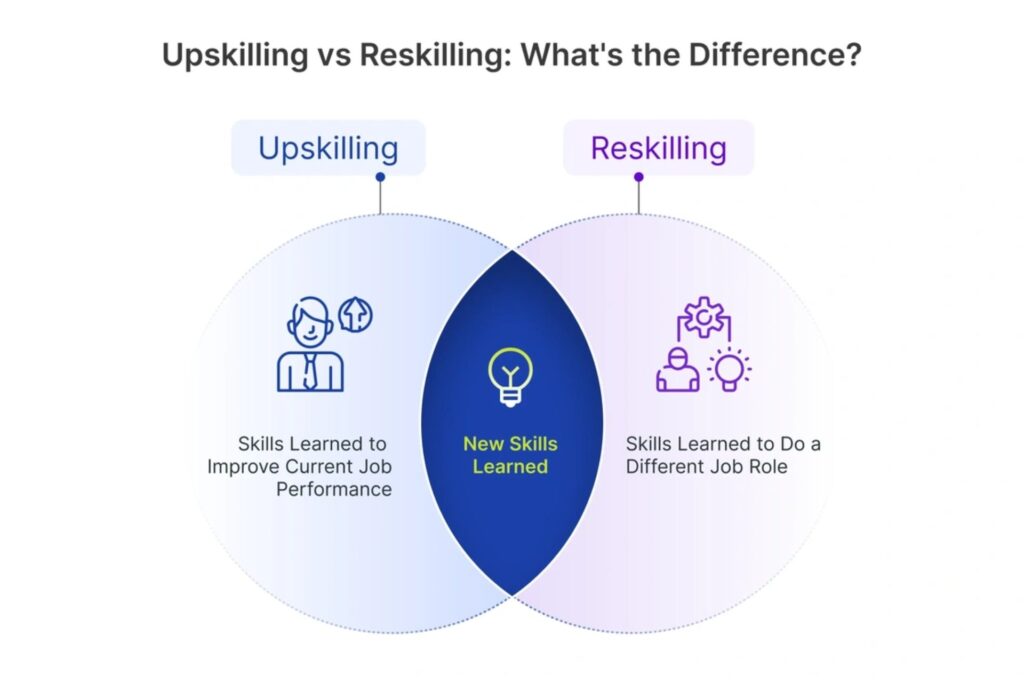
The job market is changing faster than ever, and understanding how to upskill and reskill makes a significant difference in career growth. These two different approaches to professional development help achieve specific career goals.
Upskilling builds on your existing skill set to help you perform better in your current position or move up in your chosen career path. You could think of it as “leveling up” your capabilities within your field. The process deepens your knowledge about your role and industry. You gain specialized expertise through targeted learning like skills development courses, certifications, or mentorship programs. Research shows that upskilling helps you reach goals, stay competitive, qualify for promotions, land better jobs, and earn higher salaries.
Reskilling takes a different approach. You learn completely new skills to switch to a different role or career. This path prepares you for sideways movement rather than moving up the ladder. The World Economic Forum predicts that technology changes will mean reskilling of 50% of the global workforce by 2025. The process usually needs more structured learning than upskilling. Most people choose formal education, intensive boot camps, or hands-on experience in their new field.
Job descriptions keep evolving, making both approaches vital today. Companies that invest in employee development see better engagement and keep their staff longer. The Fourth Industrial Revolution has made continuous learning essential, with automation and AI redefining job requirements. Organizations can curb skill shortages through upskilling and reskilling, while employees get the tools to tackle future challenges.
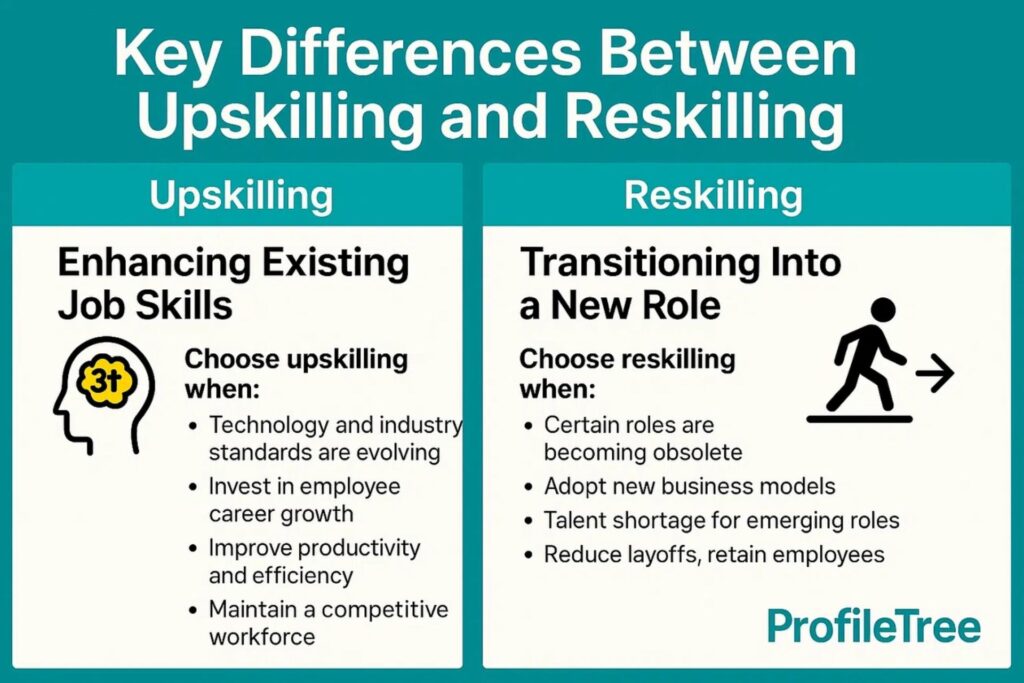
Upskilling and reskilling both focus on learning but serve different purposes in career development. A clear understanding of these differences will help you make better decisions about your professional growth.
The main difference between these approaches lies in their career objectives. Your current field benefits from upskilling through a linear path that focuses on career progression and business growth. Reskilling, on the other hand, prepares you to make lateral moves and enables complete career changes. A person seeking advancement in their current role would benefit from upskilling, while someone looking to switch to a new professional field would need reskilling.
Each strategy needs a different level of commitment. Reskilling takes longer—usually months or years—and needs more resources. Upskilling programs are shorter, more focused, and more affordable. This reflects the basic difference between improving what you already know versus learning completely new skills.
The learning approaches vary greatly between the two. You can upskill mainly through on-the-job training and workshops that build on your existing knowledge. Reskilling often needs formal education through new certifications, cross-training programs, or intensive boot camps. Learning completely new skills from scratch makes this necessary.
These paths lead to different professional outcomes. Upskilled professionals stay in their roles but take on expanded responsibilities. The whole picture changes with reskilling – both your job title and daily work change by a lot as you move into a new position. This fundamental change marks the biggest difference between these two development paths.
You need to think about upskilling and reskilling based on where you are now and where you want to go. The right choice depends on market trends, what you want to achieve, and what resources you have at hand.
Upskilling works best if you want to move up in your current field. This path makes sense when your job stays relevant but you need more expertise. Your original role should still be stable, and your industry should be growing rather than facing major disruption. Upskilling runs on steady change. Research shows that 61% of people believe global megatrends substantially affect their jobs, which pushes them to sharpen their skills. This approach fits well when you have a strong career base but need a boost to stay ahead in changing markets.
You just need to reskill when tech advances reshape or wipe out your role. The World Economic Forum tells us that 50% of employees will need reskilling by 2025 because of tech developments. Reskilling fits best when your skills don’t match what the market wants anymore or when you’re ready to jump into a new career. To cite an instance, if robots might take your job or your industry faces major changes, reskilling helps you tackle these challenges head-on.
Start with a skills check – list what you know versus what employers want. We looked at job listings to spot gaps in qualifications. Companies that put money into ongoing learning see better team flexibility, efficiency, and state-of-the-art solutions. On top of that, it helps to watch industry trends to get ready for future skill needs instead of playing catch-up with market changes.
The choice you make should fit your bigger career dreams. Right now, 42% of workers want upskilling opportunities, with young professionals showing even more interest. Ask yourself where you want to end up – moving up or switching paths? Build a growth plan that connects new skills to specific career goals. Data shows that workers who get chances to grow stick around longer and work harder. Note that your learning plan should match both what you want and what companies need to work well.
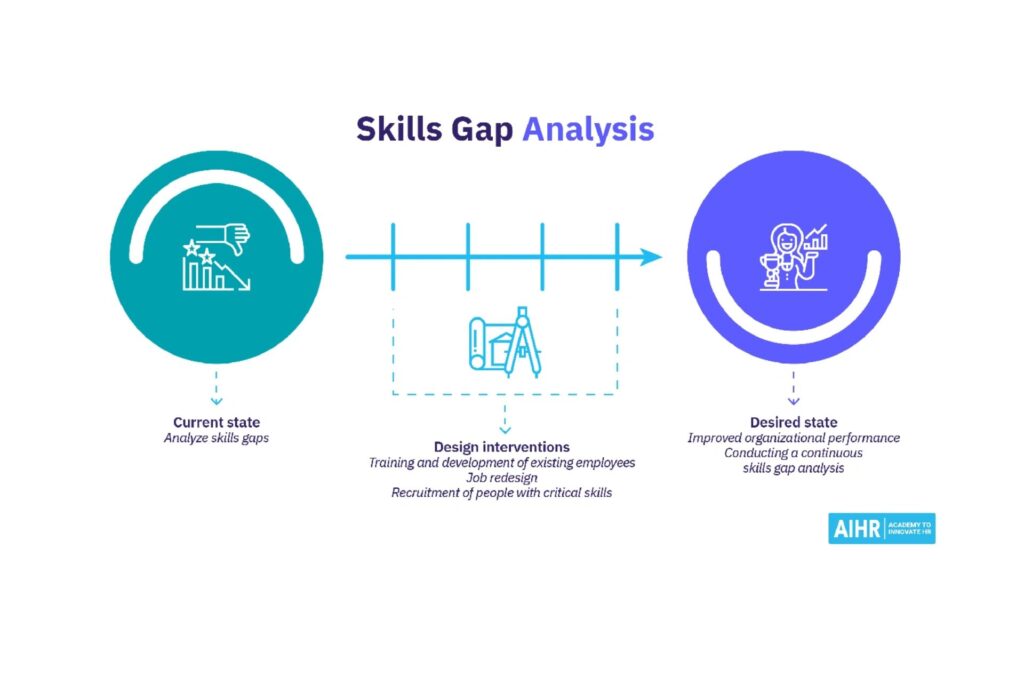
You need a solid learning strategy after choosing your skill development path. A well-laid-out approach will give a better chance of success in your upskilling and reskilling efforts.
A detailed skills audit will help you spot areas that need improvement. McKinsey reports that 87% of companies either face or expect skill shortages. The best way to start is to analyze job descriptions in your field. You should also review industry publications and talk to mentors about emerging requirements. We focused on both technical capabilities and soft skills that add value in different roles.
Learning resources should match your needs and learning style. You can choose from e-learning platforms, hands-on workshops, and mentorship programs. Research reveals that tech professionals find hands-on experiences most useful, especially when combined with video content. Your chosen platform should be flexible since 42% of professionals say they’re too busy to learn new skills.
Your development trip needs specific, measurable goals. Define what success means to you – it could be getting certified, mastering new skills, or qualifying for different roles. Break these big goals into smaller milestones to stay motivated. LinkedIn data shows that people with career goals use learning content four times more than others.
Use concrete metrics to track your progress. Look at improvements in productivity, skill assessment scores, or how you use new knowledge in projects. Companies see the benefits too – 94% of employees stay longer at organizations that invest in their development. This investment leads to better performance metrics.
Time constraints are a common challenge, but you can work learning into your daily schedule. The good news is 74% of tech professionals get some learning time during work hours. Build a supportive environment by connecting with peers on similar paths. Remember to celebrate small wins as you progress.
Finding the right partner for professional development can make all the difference between stagnation and success in today’s skill-driven market. ProGrow emerges as a detailed solution that just needs your career aspirations to create specialized programs for upskilling and reskilling.
ProGrow’s customized skill development programs connect academic knowledge with practical application. You get access to interactive workshops and ground simulations that boost critical professional skills through their corporate finishing school services. These skills include communication, leadership, and team collaboration.
ProGrow’s tailored approach to career development sets them apart. They help you achieve your personal goals through constant follow-up and incentives. This matches research showing that 94% of workers stay longer with companies that invest in their career development.
ProGrow offers practical benefits to support your learning experience. A flexible hybrid work regime helps balance your professional and personal life. You also get health insurance coverage and training plans with internal supervision.
ProGrow believes that tailored career paths develop business-critical skills and boost employee retention. Their engineering and management finishing schools focus on preparing you for evolving workplace demands. This helps you maximize your career potential, whatever your goal is – upskilling in your current role or reskilling for a new career direction.
| Aspect | Upskilling | Reskilling |
|---|---|---|
| Primary Purpose | Building on existing skills in your current field | Learning completely new skills for a different role |
| Career Direction | Moving up in the same field | Switching to a new career path |
| Time Investment | Quick, targeted programs | Extended learning periods (months to years) |
| Learning Methods |
• On-the-job training • Workshops • Mentorship programs |
• Formal education • Boot camps • Cross-training programs • New certifications |
| Resource Requirements | Economical solutions | Major investment needed |
| Impact on Role | Same position with added responsibilities | New job title and different daily tasks |
| Best Suited For |
• Your industry changes slowly • You want to advance in your field • Your current role stays relevant |
• Your job risks automation • Your industry faces disruption • You need a career change |
| Market Context | 61% believe global trends affect their jobs | 50% of employees will need reskilling by 2025 |
The digital world keeps changing faster than ever. Your career’s future depends on how well you adapt by learning new skills or switching careers. You’ll need to choose between getting better at what you do now or starting something completely new. This choice comes down to your career plans, what’s happening in your industry, and where you want to go.
Start by checking your skills against what the market needs right now. Look for gaps and make sure your learning matches your long-term goals. Set clear targets, pick the right learning platforms, and keep track of how you’re doing. These steps will help you get real results.
Whatever path you pick, having the right learning partner boosts your chances of success by a lot. ProGrow stands out with custom skill programs that fit your needs. They give you practical benefits like flexible work options. Their engineering and management finishing schools help you tackle the challenges you’ll face at work.
Tomorrow belongs to people who never stop learning. Taking action today opens doors tomorrow. ProGrow can help create a plan that fits your professional dreams. Your growth starts with making the right choice now.
Upskilling involves enhancing existing skills within your current field, while reskilling means learning entirely new skills for a different career path. Upskilling typically requires less time and resources, focusing on linear career advancement. Reskilling, however, involves a more substantial investment and prepares you for a complete career transition.
Consider upskilling if you want to advance in your current field, and your industry is evolving gradually. Opt for reskilling if your role faces automation risks, your industry is experiencing disruption, or you’re seeking a complete career change. Assess your long-term career goals and market trends to make the best decision.
Upskilling often involves on-the-job training, workshops, and mentorship programs. Reskilling typically requires more formal education, such as boot camps, cross-training programs, or new certifications. Both can benefit from online learning platforms, hands-on experiences, and setting clear learning objectives.
Track your progress by setting specific, measurable goals and breaking them into achievable milestones. Measure improvements in productivity, skill assessment scores, or the application of new knowledge in work projects. For organizations, success can be reflected in improved employee retention rates and enhanced performance metrics.
Investing in skill development can lead to career advancement, higher job security, and potentially increased earnings. For employees, it provides adaptability in a changing job market. Organizations benefit from improved staff flexibility, efficiency, and innovation. Studies show that companies investing in employee development experience better engagement and retention rates.
ProGrow delivers world-class training and career services, combining expert guidance with hands-on learning experiences.
ProGrow delivers world-class training and career services, combining expert guidance with hands-on learning experiences.