
Home /Blog /Impact of AR/VR on Technical and Vocational Training
Research spanning 20 years (2000-2021) has shown that AR training has significantly improved vocational skill development in many industries. Scientists analyzed 80 studies about AR applications in different training settings. The results demonstrate the growing role of AR technology in reshaping how people learn and master technical and vocational skills.
Medical training, industrial maintenance, and assembly processes lead the way in AR training applications. The technology creates immersive learning experiences that boost involvement and let users build practical skills through hands-on virtual practice. AR training systems employ various tools like AR glasses, simulators, Unity3D game engines, 360° panoramas, and specialized AR systems. These technologies make learning by doing easier—a vital part of effective vocational training.
This piece explores the biggest problems in technical training. You’ll learn how industries adopt AR/VR technologies in vocational programs and their measurable effects on learning outcomes and skill development.
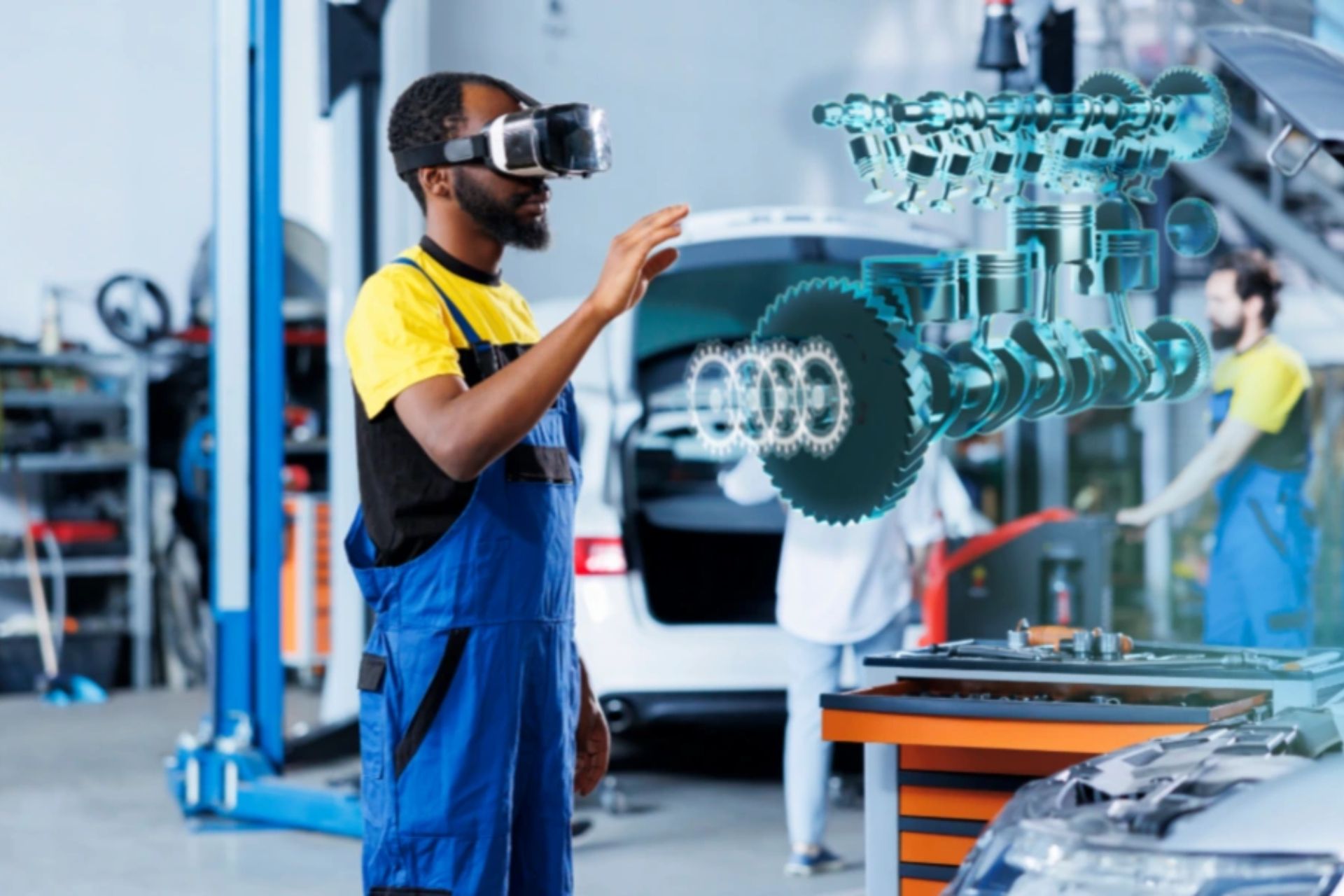
The world’s technical and vocational training systems are in deep crisis. Students aren’t learning the skills that industries need, creating a huge gap between education and employment. The numbers tell a concerning story – only 8.25% of graduates find jobs matching their qualifications, while more than half end up in low-skill positions.
These training programs don’t seem to work well. Just 43% of certified young people work in their trained field. The satisfaction rate among employers has fallen from 86.3% to 78.7% over twelve years, showing a clear decline in quality.
Limited resources make everything harder. Schools focus too much on technical skills alone. They often miss teaching crucial cognitive, digital, and entrepreneurship skills that both students and companies need. The core infrastructure problems run deep – labs lack equipment, facilities are outdated, and students can’t learn properly.
Money is tight everywhere in the system. The funding gap between rich and poor countries is stark. Low and middle-income nations spend less than 0.2% of GDP on vocational training, while high-income countries invest 0.46%.
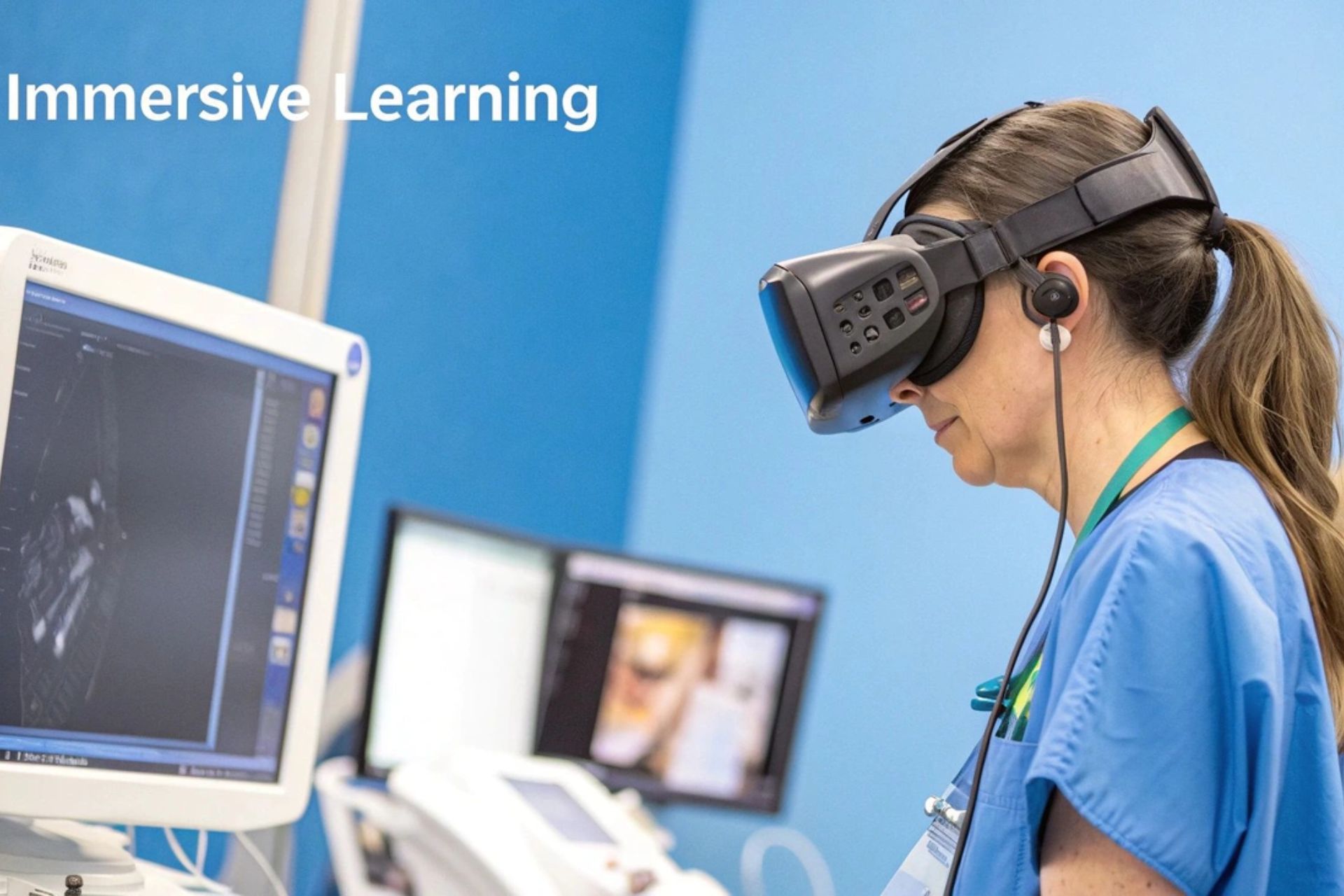
VR and AR technologies are transforming vocational training faster than ever before. The virtual training and simulation market, valued at INR 37962.76 billion in 2024, will reach INR 71233.98 billion by 2030. This represents a strong 11.1% CAGR.
Medical students now train in immersive, three-dimensional clinical environments through VR simulations. They can practice procedures safely without any risk to patients. Nursing residency programs have shown substantial improvements in self-assessed competence through these simulations.
Companies like Loft Dynamics have revolutionized aviation training. Their VR flight simulators cost 20 times less and take up 10 times less space than traditional full-flight simulators. IATA’s RampVR™ Certification has become the standard for airport-related training by proving it right against industry standards.
AR training platforms help workers get immediate guidance during complex assembly tasks. Boeing’s employees use AR to assemble aircraft wire harnesses, which has led to better accuracy and fewer errors.
Want to improve your vocational training programs with advanced AR/VR solutions? Check out ProgRow’s specialized courses to learn detailed ways of using these technologies.
The integration of AR/VR with Learning Management Systems helps track learner progress and skill development. These tools are now available to technical and vocational education institutions worldwide.
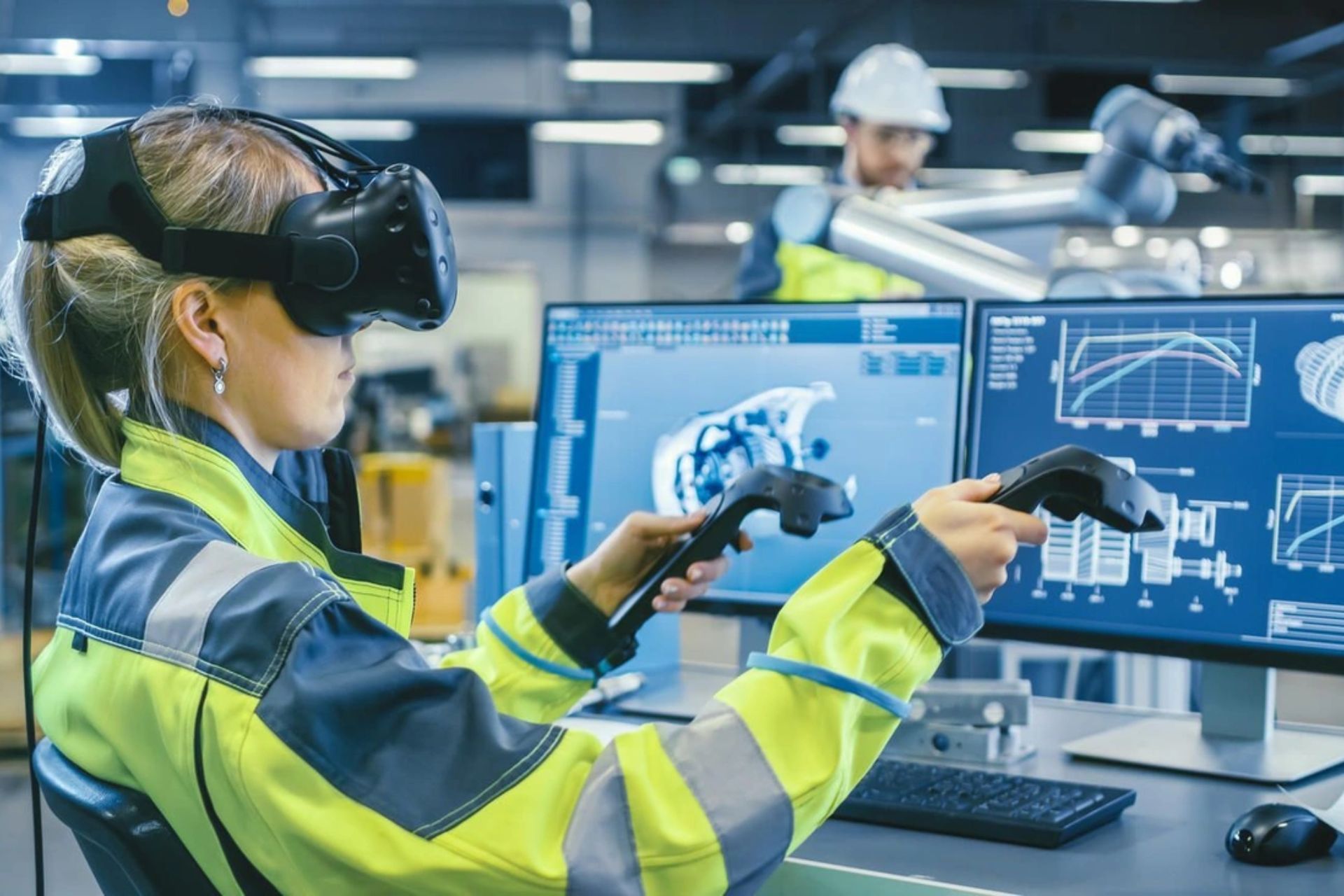
Studies show that AR brings remarkable improvements in how well people retain knowledge during training. The University of Maryland found that VR environments achieve a 90% recall accuracy rate compared to 78% with regular desktop computers. People remember 75% of information they experience through AR, while traditional lectures only achieve 20% retention.
AR/VR helps people develop skills better and faster. Medical residents who used VR for Le Fort I osteotomy procedures showed better confidence and knowledge. First-year residents gained the most from this training. Technical workers trained with AR complete their tasks four times faster than those who learned in traditional classrooms.
The brain processes information better with AR too. By showing digital information right on physical objects, AR reduces the mental effort needed to learn new things. This works especially well when teaching step-by-step procedures. Research shows that spatial AR creates less mental strain than see-through AR.
VR simulation provides immediate feedback that helps people practice effectively. This solves the problem of limited training staff. The Icahn School of Medicine demonstrates this benefit well – they cut costs by 83% after using VR for advanced cardiac life support training.
Want to use state-of-the-art AR in your technical training programs? Check out specialized courses at https://progrow.co.in/courses/ to become skilled at using these powerful educational tools.
Research occasionally shows mixed results, but the evidence clearly shows that well-designed AR/VR training leads to better skills, higher engagement, and economical solutions in vocational education.
AR/VR technologies have become game-changers for technical and vocational training programs worldwide. These immersive technologies tackle key challenges that traditional training methods don’t deal very well with, especially when you have a persistent skills gap between education and industry needs.
Vocational training’s future will embrace these technologies even more. AR/VR systems are becoming cheaper and easier to use, which means smaller training centers can now access them too. This wider availability of immersive learning tools could help fix the concerning employment gap where only 8.25% of graduates find work matching their skills.
AR/VR technologies aren’t just fancy add-ons to existing programs – they reshape the scene of how people learn, practice, and master technical skills. Better retention, faster skill development, less mental strain, and cost savings make these tools crucial parts of modern vocational education.
AR/VR technologies significantly improve knowledge retention. Studies show that learners remember 75% of information experienced through AR compared to only 20% through conventional lectures. VR environments have demonstrated a 90% recall accuracy rate, substantially higher than traditional learning methods.
AR/VR technologies can lead to substantial cost savings in training programs. For instance, the Icahn School of Medicine reported an 83% cost reduction after implementing VR for advanced cardiac life support training. In aviation, VR flight simulators are 20 times less expensive and 10 times smaller than traditional full-flight simulators.
AR/VR technologies accelerate skill acquisition in technical fields. Employees trained using AR complete tasks four times faster than those trained in traditional classroom settings. These immersive technologies also provide real-time feedback and facilitate deliberate practice, addressing the limitations of staff resources in training environments.
Yes, AR/VR technologies can help bridge the skills gap by providing more effective and industry-relevant training. These immersive technologies allow learners to gain practical skills through hands-on virtual practice, better preparing them for real-world job requirements and potentially improving employment outcomes for graduates.
AR/VR technologies are being widely adopted across various industries for vocational training. They are particularly impactful in healthcare for medical and nursing simulations, aviation for flight training, manufacturing for complex assembly tasks, and industrial maintenance. These technologies are proving especially valuable in high-risk environments where hands-on training can be dangerous or costly.
ProGrow delivers world-class training and career services, combining expert guidance with hands-on learning experiences.
ProGrow delivers world-class training and career services, combining expert guidance with hands-on learning experiences.