
Home /Blog / How CSR Initiatives Are Transforming Skill Development in India
India boasts one of the world’s youngest populations. CSR initiatives focused on skill development play a crucial role in shaping our future workforce. Each year, millions of graduates enter the job market, yet only a small percentage meet the standards employers need. This gap in skills poses a major hurdle to our country’s economic growth.
The corporate sector has stepped up to address this challenge through targeted skill development programs in India. Companies now dedicate more than 25% of their CSR investments to education and skill enhancement. The program brought together Indian corporates and government colleges in Tier 2 and Tier 3 cities, with special emphasis on underserved areas. This program stands out among successful CSR examples. It set out to train 5,000 students from low-income backgrounds in BFSI sector skills. The results proved remarkable – 4,820 students completed their training, and more than 2,800 found jobs in banks, NBFCs, and Fintechs within six months.
Here, we will look into how corporate social responsibility transforms skill development in India. We’ll get into the rising demand for these initiatives and their measurable effects on our workforce and economy.

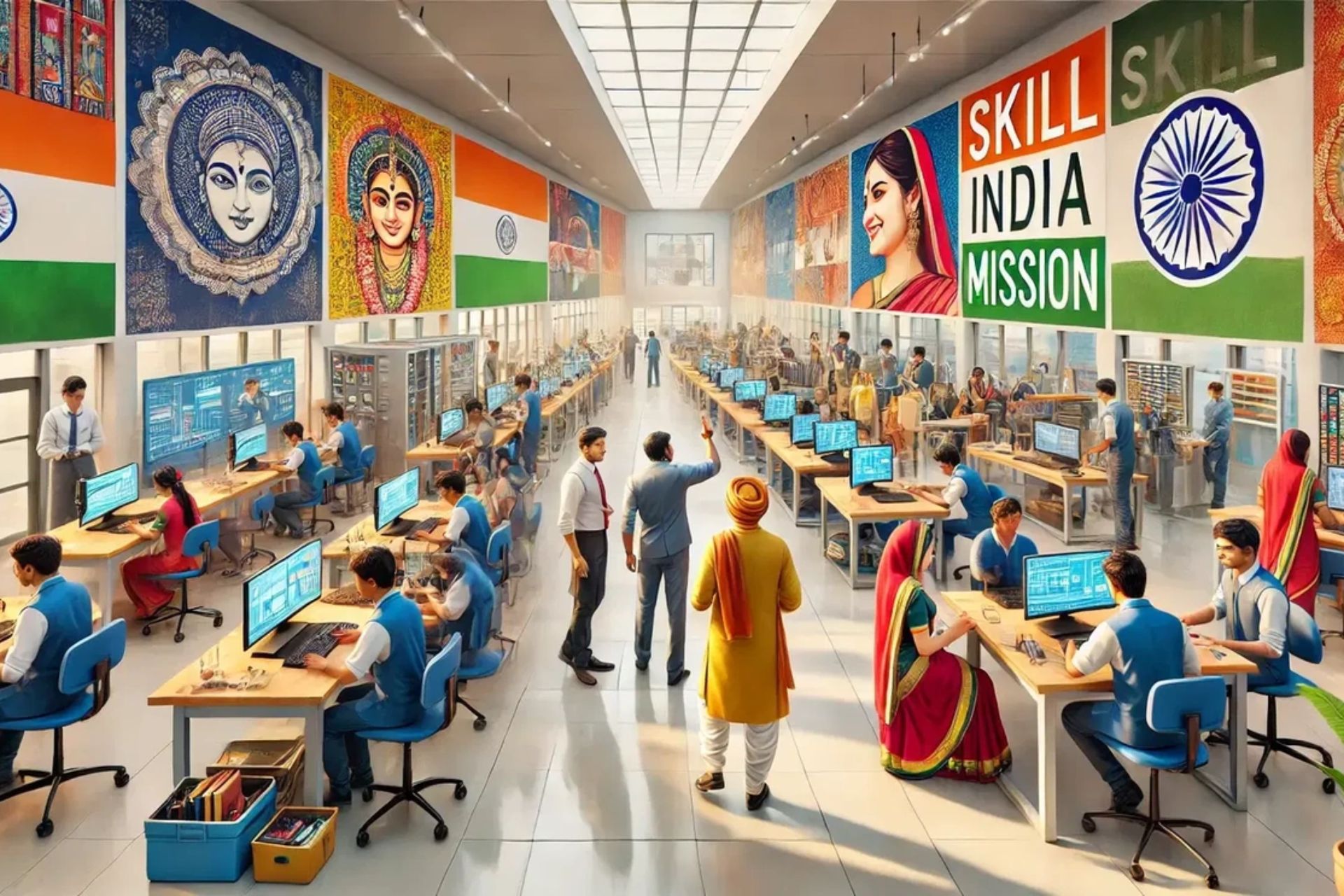
India faces a puzzling workforce challenge. The country has 62% of its population in the working age group, yet graduates struggle to find jobs. Graduate unemployment jumped from 20% in 2012 to 34% in 2021.
Poor skill development lies at the heart of this crisis. Just 2.3% of India’s workforce has received formal skill training. These numbers pale in comparison to South Korea’s 96%, Germany’s 75%, and Japan’s 80%. Indian employers find it hard to fill positions – 48% cite skill shortages as the main reason.
Current initiatives show disappointing results. The Pradhan Mantri Kaushal Vikas Yojana helped only 15% of trainees find jobs. The situation looks worse when you consider that all but one of these graduates work in fields unrelated to their studies.
The job market changes faster each day. New sectors like AI, healthcare technology, renewable energy, and digital marketing just need skills that traditional education doesn’t provide.
The growing skills gap needs immediate attention. Eight million new job seekers enter the market every year. CSR initiatives that focus on skill development could bridge this divide. These programs are vital to realize India’s demographic potential before this chance slips away.
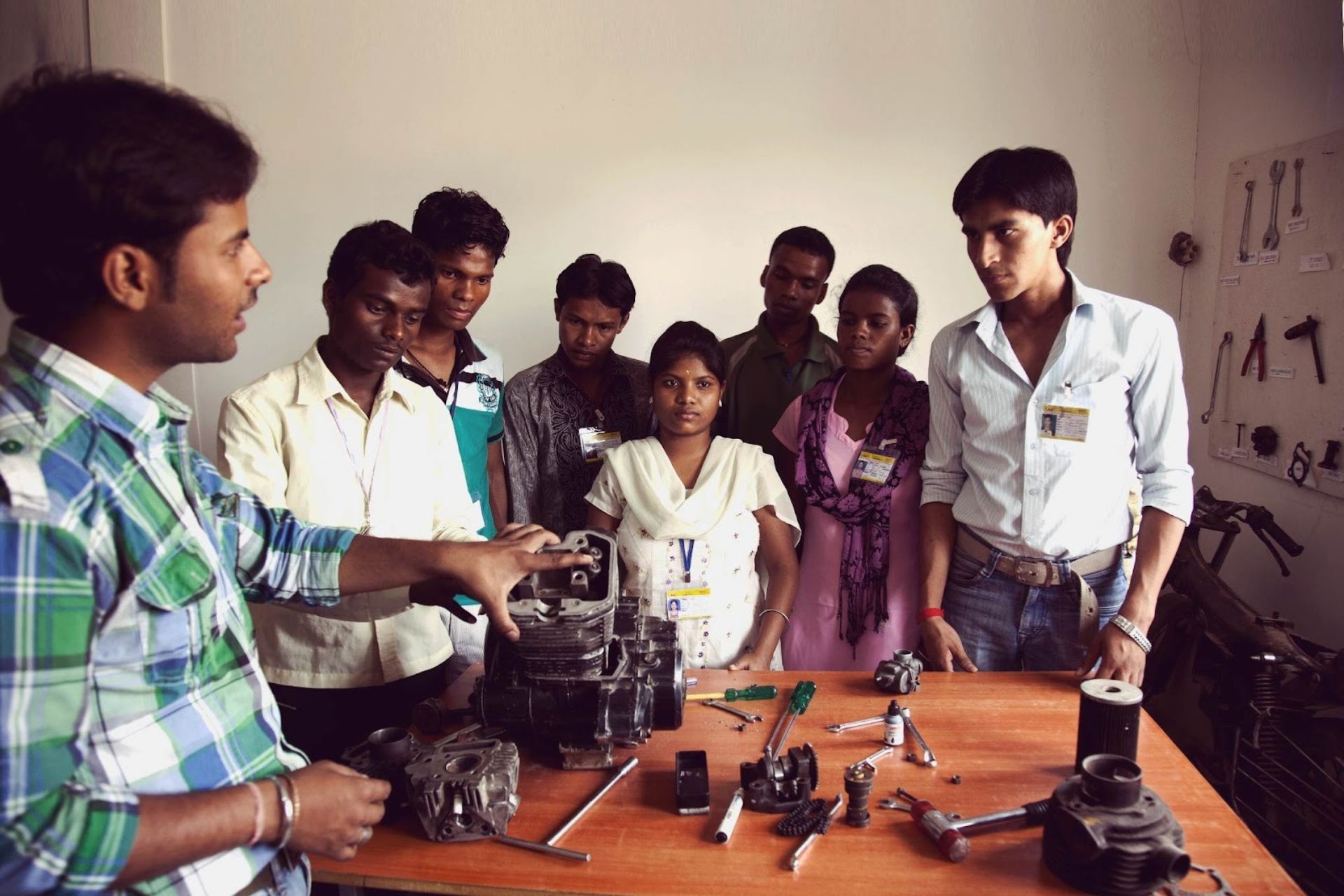
Major Indian corporations have launched strong CSR skill development programs that target specific industry needs. Maruti Suzuki set up Japan-India Institutes for Manufacturing 10 years ago, which achieved 100% job placement for their graduates. Their 43 government-run Industrial Training Institutes spread across 14 states have trained over 10,000 students with a 72.5% placement rate.
Oil PSUs stepped up their game through programs like Skill Development Institute Bhubaneswar and OIL Swabalamban. These initiatives trained 18,117 candidates and successfully placed 14,220 of them since 2013.
Companies are working hard to bridge the digital gap through focused programs:
The BFSI sector’s training efforts have picked up speed as the industry needs 8.5 million workers by 2022. Corporate-NGO partnerships have created complete training ecosystems. Programs like EduBridge have trained more than 300,000 young people and launched over 200,000 careers.
You can find individual-specific guidance about skill development courses through CSR initiatives at ProgGrow’s course offerings. These courses line up perfectly with your career goals.
The measurement of CSR initiatives in skill development now goes beyond counting participants. Theory of Change is a vital framework that shows how interventions create specific development changes through evidence-based causal analysis. This approach helps teams find solutions to roadblocks that slow down progress.
Social Return on Investment (SROI) stands out as a powerful tool that puts a financial value on social outcomes from CSR programs. To name just one example, a skill development program in Bhubaneswar showed remarkable results with an SROI ratio of 5.69:1. This means every INR 1 invested created INR 5.69 in social and economic benefits. The success continued with another program that achieved an SROI of 5.91:1.
Companies now focus on outcomes rather than outputs. They track improved income levels and lower unemployment rates instead of just counting trainees. This gives everyone a better picture of the actual effects.
Ready to boost your career? Check out ProgGrow’s course offerings for CSR-backed training programs that can help advance your career.
Strong data collection remains at the heart of CSR impact assessment. Digital tools now help track immediate participation in training programs.
CSR initiatives are revolutionizing India’s skill development landscape. The country faces a critical skills gap that puts our demographic dividend at risk. Our young workforce gives us an advantage, but barely 2.3% have received formal skill training.
The measurable results make these initiatives valuable. SROI ratios of 5.69:1 and 5.91:1 show that each rupee invested in skill development creates nearly six times the social and economic value. This data-driven approach helps us measure benefits beyond just counting participants.
Companies now focus on outcomes rather than outputs when measuring success. They track real improvements in income and employability instead of just counting how many people complete training.
Time is running out to tap into our demographic advantage. Eight million new job seekers enter the market each year, making effective skill development more urgent than ever. CSR initiatives offer a promising way to utilize India’s human potential while meeting industry needs.
Challenges exist, but success stories give us hope. CSR-driven skill development isn’t just corporate giving – it’s a smart investment in India’s economic future.
CSR initiatives are tackling the skills gap through vocational training programs, digital literacy courses, and partnerships with educational institutions. Companies like Maruti Suzuki have established training institutes, achieving high job placement rates, while others focus on emerging sectors like cloud computing and cybersecurity.
CSR skill development programs have shown a significant positive impact on employment. For instance, some initiatives have reported job placement rates of up to 100% for their graduates, while others have successfully placed thousands of trained candidates in various industries, particularly in the BFSI sector.
The effectiveness of these initiatives is measured using tools like Theory of Change and Social Return on Investment (SROI). Companies are shifting focus from outputs (number of trainees) to outcomes (improved income levels, reduced unemployment rates). Some programs have demonstrated SROI ratios as high as 5.91:1, indicating substantial social and economic benefits.
CSR skill development programs are targeting various sectors, with a particular focus on emerging fields. These include digital literacy, cloud computing, cybersecurity, and the BFSI sector. Additionally, traditional sectors like manufacturing are also being addressed through specialized training institutes.
CSR initiatives in skill development create a win-win situation. They help address India’s critical skills gap and unemployment issues, particularly among youth. For corporations, these programs develop a skilled workforce aligned with industry needs, potentially leading to a more qualified talent pool for their own recruitment. Moreover, such initiatives contribute to poverty alleviation and rural development, enhancing the overall socio-economic landscape.
ProGrow delivers world-class training and career services, combining expert guidance with hands-on learning experiences.
ProGrow delivers world-class training and career services, combining expert guidance with hands-on learning experiences.